How in-house legal teams keep contracts organised
This article is general information, not legal advice.
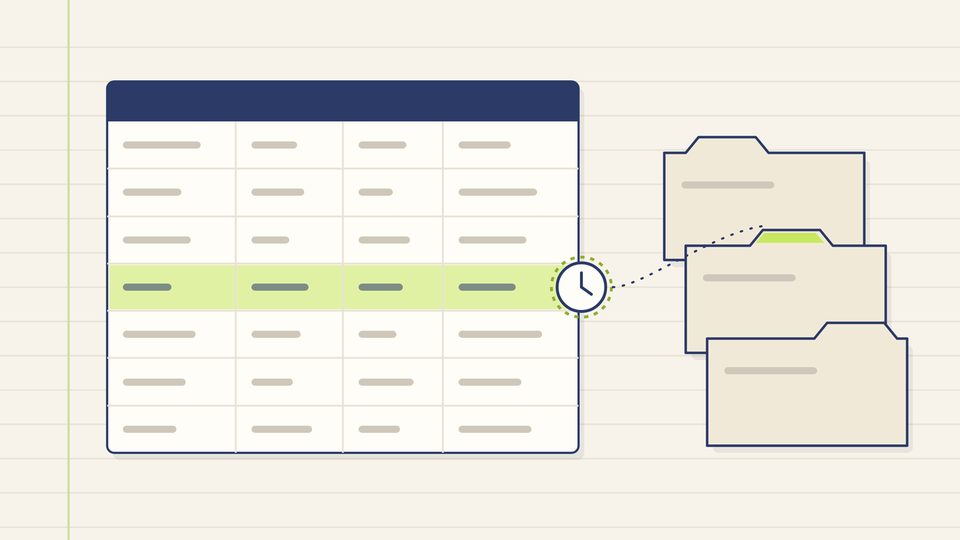
How an in-house legal team can build a contract register: the fields to record, the dates that matter, one owner per contract and a simple review routine.
"Do we have a contract with them?"
It is one of the most common questions an in-house legal team is asked, and one of the slowest to answer. A colleague wants to know whether the company has an agreement with a supplier, whether it is still in force, and how much notice is needed to end it. The signed copy might be in someone's inbox, on a shared drive under a file name like "final v3", in a cupboard, or with a person who has since left.
Many teams have some version of this. Contracts arrive through many doors: sales, purchasing, human resources, facilities, the founders. Each one was reviewed when it was signed. Afterwards, few of them have an owner.
This article describes a common way to organise contracts so that those questions take minutes rather than days. It is general information about working practice, not advice on any company's obligations.
The dates that matter are not the signing date
The date most often recorded is the date of signature. The dates that cause trouble are different: the last day to give notice to stop an automatic renewal, the end of a lock-in, the expiry of a warranty, a price review. A contract that needs ninety days' notice before it renews has to be acted on about three months before the renewal date, not on the renewal date itself.
That is why the heart of a good system is not where the files are kept but a register: one list, with one line per contract, holding the facts people actually ask about.
What to record
A practical register usually holds, for each contract:
| Field | Why it matters |
|---|---|
| Other party (exact legal name) | Finding the right contract, and the right party to notify |
| Type of contract | Grouping and reporting |
| Internal owner | One person answerable for the contract |
| Who signed, and when | Authority, and the start of the record |
| Start date, term and end date | Knowing whether it is in force |
| Renewal: automatic or not | An obligation that is easy to miss |
| Notice period and the last date to give notice | The date that actually needs a reminder |
| Value and payment terms | Deciding which contracts get attention first |
| Governing law and where disputes go | The first question when something goes wrong |
| Stamping and registration status | Whether the document can be relied on later |
| Where the signed copy is | So that nobody has to hunt for it |
| Amendments and related documents | So that the current terms are known |
| Status | Active, expired, ended or renewed |
A few rules that keep it working
A register decays unless a few rules hold:
- One owner per contract. Usually the person in the business who relies on it, with the legal team in support.
- One final copy. Only the signed, final version is stored as "the contract", under a consistent file name such as other party, type and date.
- No signature without a register line. Adding the line is part of signing, not a later tidy-up.
- Reminders run from the notice date, with enough lead time to decide, not from the end date.
- A regular review. Once a quarter, walk through the register: what is ending, what is renewing, what has changed.
The routine, start to finish
Put together, a contract follows a simple path. A request comes in. The legal team reviews the draft against the company's standard positions. Someone with authority signs it. The final copy is stored and the register line is completed. Reminders arrive before the notice date. At the end, the contract is renewed, renegotiated or ended on purpose rather than by accident.
How long to keep contracts and related records after they end is worth agreeing with your advocate or company secretary. Record-keeping rules, and the time limits for bringing claims under the Limitation Act, 1963, both bear on that decision. The Act is published on India Code.
What changes
The question "do we have a contract with them?" is answered from one place, in minutes. Renewals happen because someone decided they should. When a dispute starts, the team begins with the signed copy, the governing law and the notice clause in hand, instead of searching for them. None of this needs special software: a carefully kept spreadsheet can be enough for a modest number of contracts, and dedicated software becomes more useful as volumes grow.
Where AI Lawyer fits
AI Lawyer is planned for in-house legal teams and law firms as well as for individuals and businesses, with no code yet. Two planned features match this work: case organisation, which keeps the documents and notes for a matter in one place, and help drafting and reviewing routine documents and contracts. Its research answers are planned to show their sources. Pricing is not decided; the plan is a subscription, with options such as document credits and law-firm licences. The page for law firms and in-house legal teams sets out the plan, and the comparison of contract review options covers the review step. For what AI tools can and cannot do with legal work in general, read the guide to AI and legal questions.
Key takeaways
- Keep one register with one line per contract; it matters more than where the files are stored.
- Set reminders from the last date for giving notice, not from the end date.
- Give every contract one owner, and store only the signed final copy.
- Agree how long to keep contracts after they end with your advocate or company secretary.
Questions
What is a contract register?
A single list with one line per contract, recording the other party, the internal owner, the key dates, the renewal and notice terms, the value, the governing law and where the signed copy is kept.
Do we need contract management software?
Not necessarily. A carefully kept spreadsheet can be enough for a modest number of contracts. Dedicated software becomes more useful as the number of contracts and the number of people involved grow.